… and what can be done about them.
The alarming rise in diabetes, particularly Type 2 diabetes, underscores the urgent need for systemic change in the UK’s food environment.
Recently, in fact on World Diabetes Day, The Lancet published a report showing that since 1990, the rates of diabetes in adults globally has doubled – from 7% to 14%.
The findings show that the UK has the second highest rate of diabetes of high-income western countries, with nearly 9% of the population living with the disease.
Diabetes is a significant health concern in Scotland, including in the Scottish Borders. Nationally, approximately 312,000 individuals in Scotland being affected. Factors like aging and socioeconomic deprivation, as well as obesity, contribute to increasing rates of the condition. And, the prevalence of diabetes is higher in rural areas, like the Scottish Borders, where barriers to accessing healthcare increase the challenges of treatment.
The cost to the NHS of diet related ill health, including diabetes, is huge. Wes Streeting, the UK Health Secretary, recently proposed the use of weight-loss drugs for unemployed people with obesity. His argument centres on the idea that obesity not only damages an individual’s health but also has significant economic impact, both in terms of massive costs to the NHS – estimated at £11 billion annually, (more than smoking) – and by contributing to unemployment, with all the associated costs to the public purse.
By far the largest proportion of those suffering from diabetes – 95% – have Type 2 Diabetes. This type of diabetes is largely preventable and reversible, not through costly medication, as Wes Streeting suggests, but by changes to the food system to encourage healthy food environments and healthy eating.
New analysis commissioned by the Food, Farming and Countryside Commission (FFCC) has found that the costs of Britain’s unhealthy food system amount to £268 billion every year – almost equivalent to the total annual UK healthcare spend.
The report, written by Professor Tim Jackson, calculated that the total food-related cost of chronic disease in the UK is a staggering £268 billion! This figure was reached by combining healthcare costs (£67.5bn), social care costs (14.3bn), welfare spending (£10.1bn), productivity losses (£116.4bn) and the human cost of chronic disease (£60bn).
To put that figure into some context, the UK’s entire annual healthcare spend totals £292 billion.
So where is the epidemic in obesity coming from? It is hard to look beyond ultra-processed foods and the control that a few large corporations have over our food systems and food environments.
Ultra-processed foods make up over half of the UK adult diet and almost two thirds of the adolescent diet. Global food companies profit by developing, making and marketing this ultra processed, unhealthy food. The global ultra processed food industry is now worth at least $2 trillion, more than a fifth (22%) of the global food market, and that proportion is increasing rapidly. Between 1993 and 2019, the ratio of shareholder returns to total revenues for the eight largest companies increased from 3.4% to almost 14%, indicating that shareholders are extracting more and more profit from developing and selling unhealthy food.
These eight companies now control more than half of the UPF market and can, and do, exert enormous economic power and influence over food policy. We see this in aggressive junk-food advertising to children, lobbying against taxes on specific ingredients and engaging in huge mergers and acquisitions to enhance their market power.
As consumers we are bombarded by choice, and our calories have never been cheaper. So, it could be argued that the big corporations are helping consumers by driving down prices so that we all have the calories we need to survive.
On the other hand, since the quality of food that is being offered, in terms of nutritional content rather than calorie count, continues to decline, the big corporations are encouraging, and profiting from, the rise in chronic disease.
The former case has led to the belief that “good food” is a middle-class luxury, with poorer families unable to afford healthy options. In this context, the large corporations would argue that they are benefitting society by producing cheaper and cheaper “food”. Yet food poverty has reached record levels, food prices have risen by more than 30% since the end of 2021, and the use of food banks has also increased. In 2023–24 the Trussell Trust distributed 3.1 million emergency food parcels, the highest number ever recorded – a 94% increase in the last five years and a 240% increase from just a decade ago.
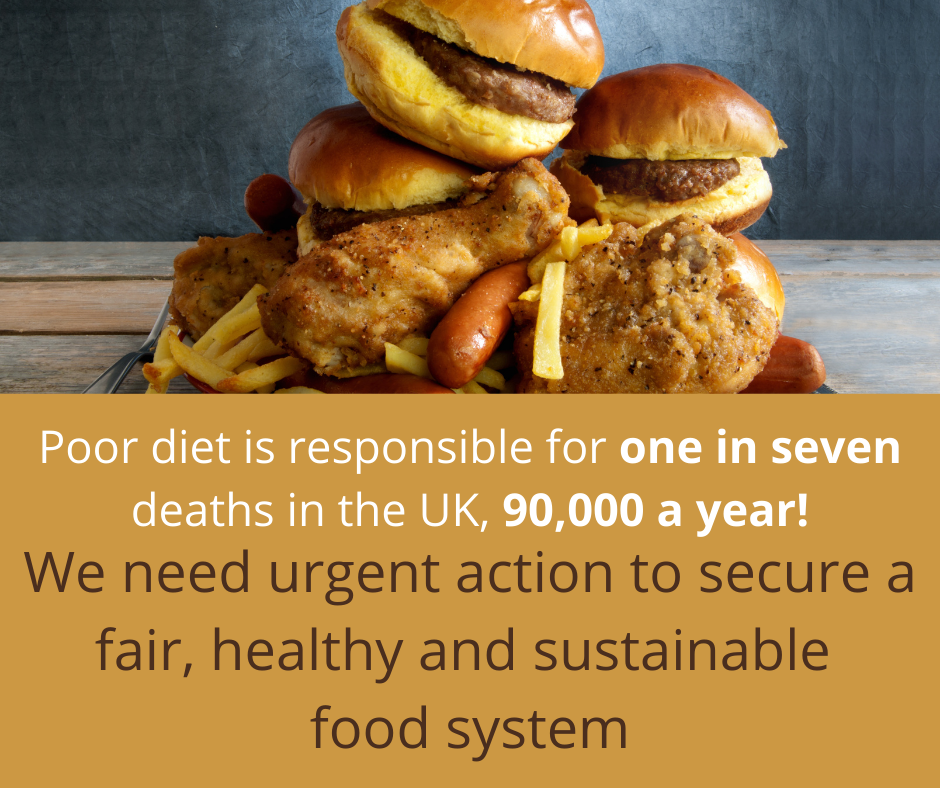
To restore balance – making good food affordable and curtailing the influence that global corporations have in moulding our food system – we need to enshrine the right to healthy food into law, establish leadership for food across government, and redirect money towards a healthier, greener, fairer and more resilient new food economy.
Achieving this requires a multifaceted response by individuals, communities, corporates, and governments.
1. Enshrining the Right to Healthy Food into Law
The Good Food Nation Act sets legal expectations for public bodies to create strategies for sustainable and equitable food systems. However, the Human Right to Food was not included in the act. Instead, it is to be included in the Human Rights Bill. We all need to ensure that this happens.
2. Leadership Across Government
The Good Food Nation Act is framework legislation which bridges several existing government departments. It will establish a Food Commission, and we need to ensure that it is dedicated to food systems, integrating public health, agriculture, and environmental sustainability and not just a branch of Scotland Food and Drink. The commission must ensure compliance, particularly from large corporations, and to hold them accountable for practices that harm public health, including stricter regulations on junk food marketing and requiring food companies to disclose ingredients, nutritional information, and the environmental impact of their products.
We must design policies that address food poverty and improve food environments. The National and Regional Food Plans provide the opportunity to tackle national and local food environments, and we must ensure this opportunity isn’t missed.
3. Redirecting Resources
We mustshift subsidies from large-scale industrial agriculture to sustainable practices and local, nutritious food production. This would make fresh fruits, vegetables, and whole foods more affordable. Paradoxically, our current systems, which reward large corporations at the expense of consumers, also work against farmers who want to work with local communities and preserve and protect local ecosystems. More should be done to fund local food initiatives like community gardens, co-operatives, and farmers’ markets to increase access to fresh, affordable food and help farmers get produce directly to local consumers. We should use regional food plans to strengthen the infrastructure for local food producers to compete against large corporations, fostering diversity and resilience in the food market.
And at the same time as incentivising healthy food, we should place higher taxes on ultra-processed and unhealthy foods
And more should be done to support initiatives that teach children and families about growing, cooking, and consuming healthy food.
4. Tackling Underlying Inequalities
There is a disturbing undercurrent in the national debate which implies that people would be in food poverty if they knew how to cook properly. This is nonsense. Food poverty is a result of income inequality and should be addressed through policies like universal basic income, living wages, and affordable childcare, enabling families to prioritize healthy eating.
At a national level there is a deep and pervasive lack of understanding of the complexities of rural poverty such that many government and funder initiatives prioritise urban disadvantage. We must use regional food plans to develop initiatives tailored to rural and underserved communities, ensuring access to healthy food despite logistical barriers.
By combining legal, educational, economic, and regulatory strategies, we can work toward a system that prioritizes public health, curtails corporate dominance, and ensures that everyone, regardless of income, can access good food.
In conclusion, the alarming rise in diabetes, particularly Type 2 diabetes, underscores the urgent need for systemic change in the UK’s food environment. With ultra-processed foods dominating diets and powerful corporations prioritizing profit over public health, addressing this crisis requires bold, multifaceted action. Enshrining the right to healthy food in law is a critical first step, ensuring access to nutritious options is a basic human right rather than a privilege. Leadership must span government departments to create cohesive strategies integrating public health, agriculture, and environmental goals. Redirecting subsidies to support sustainable local food production while taxing ultra-processed foods can shift the market towards healthier options. Addressing income inequality and tackling rural poverty through tailored initiatives will help bridge access gaps, especially in underserved areas. By uniting legal, economic, and social measures, we can dismantle the current harmful system and build a fairer, healthier food economy for all.